Infos
2025
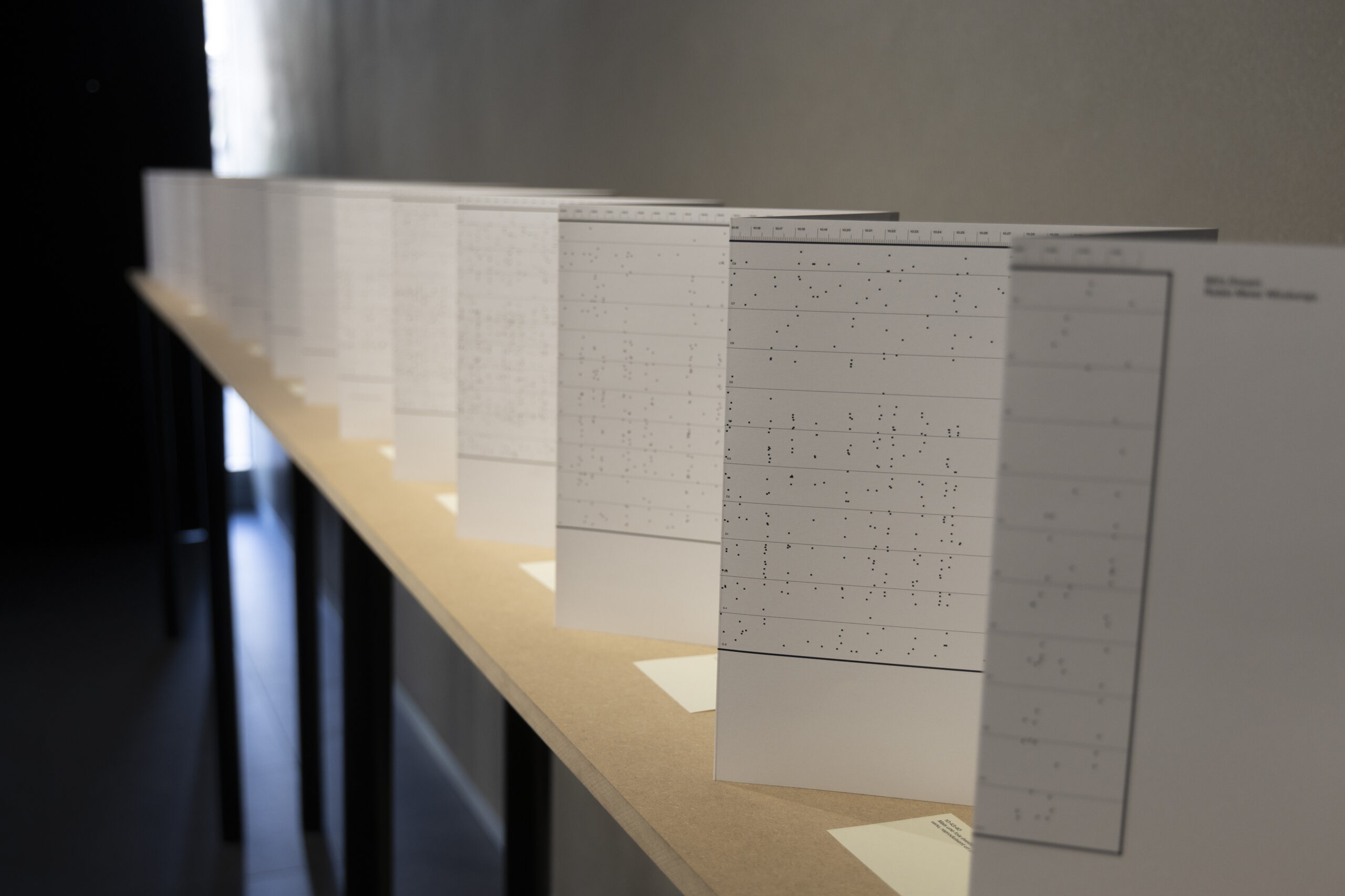
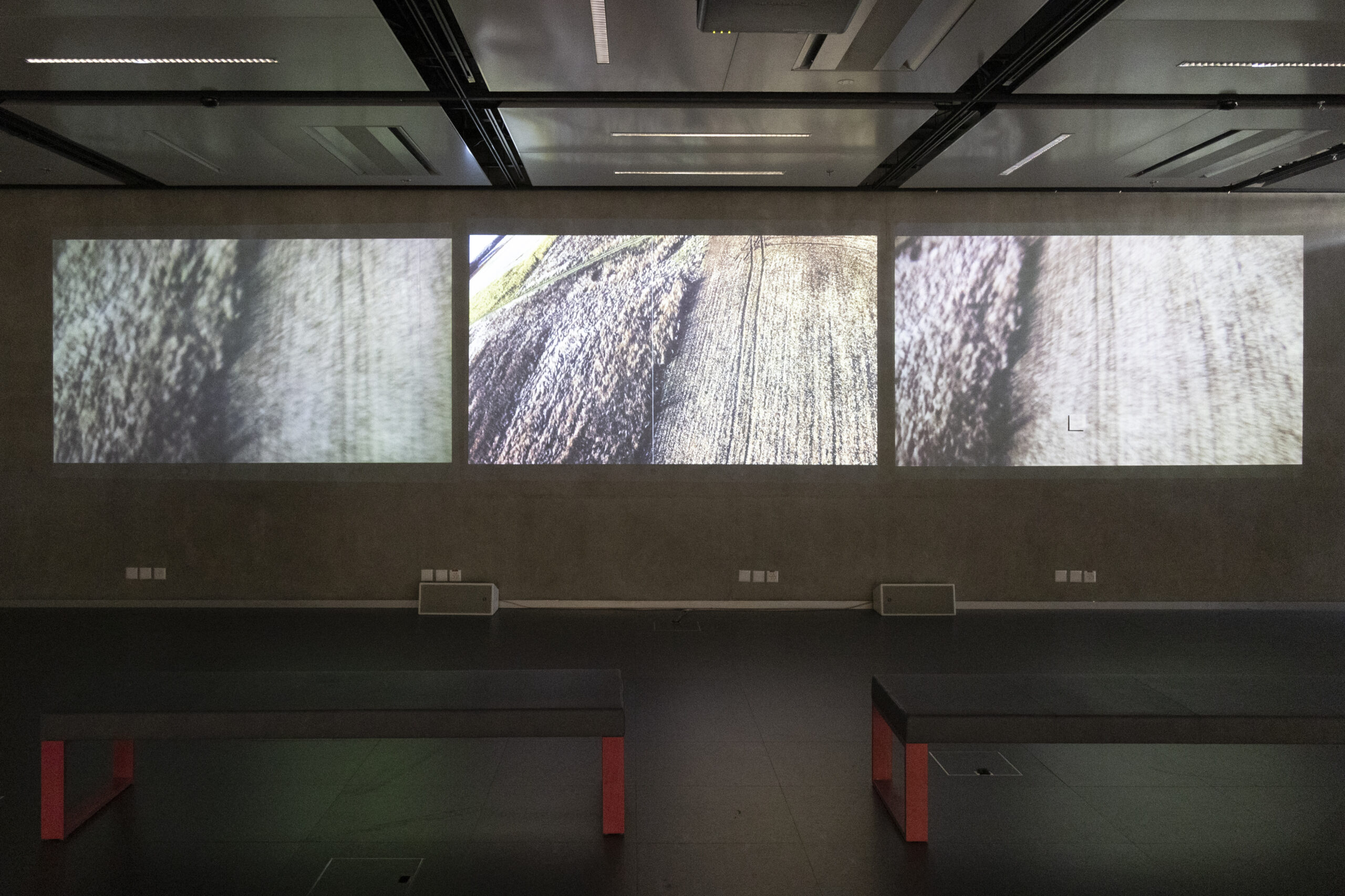
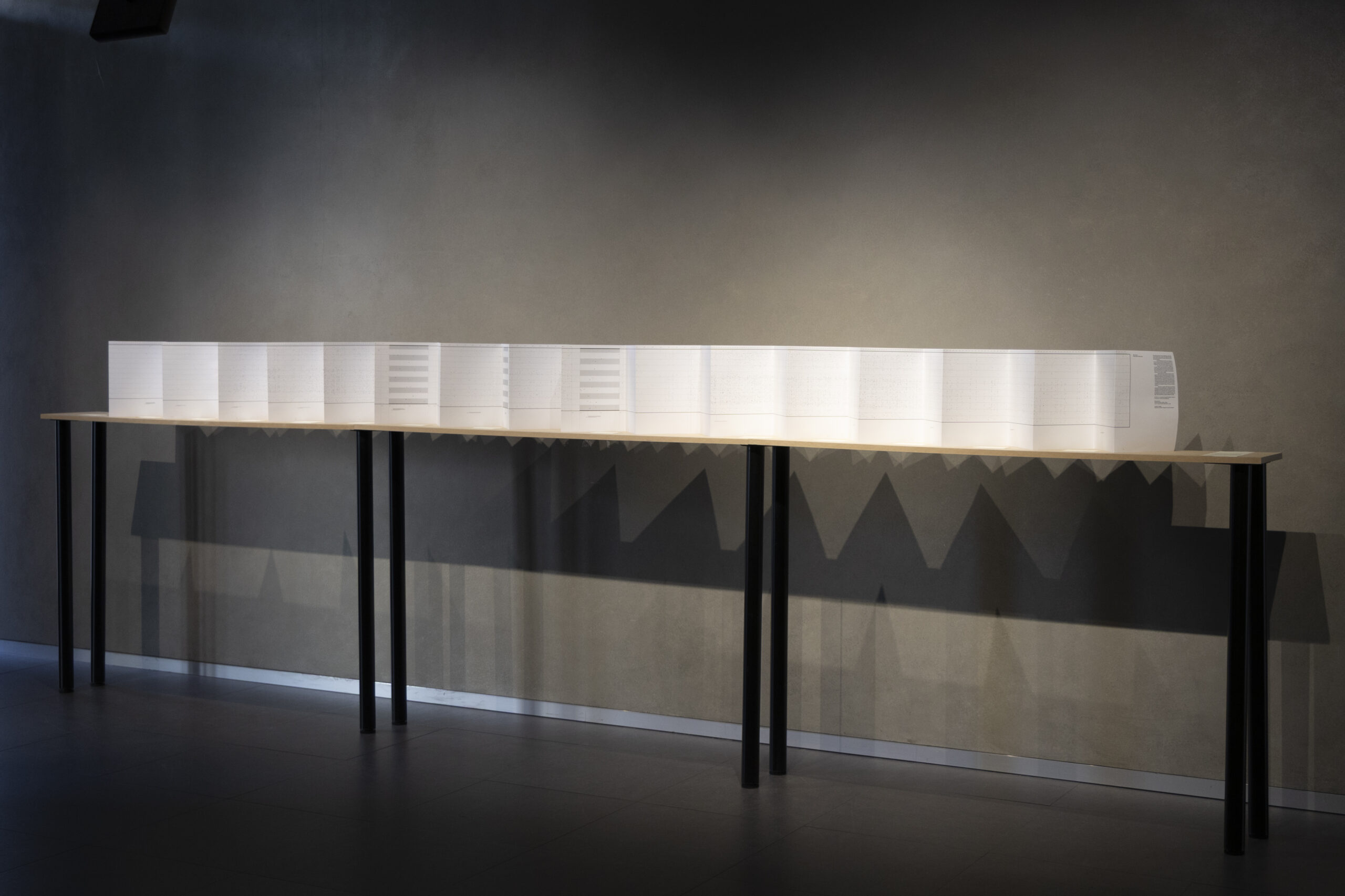
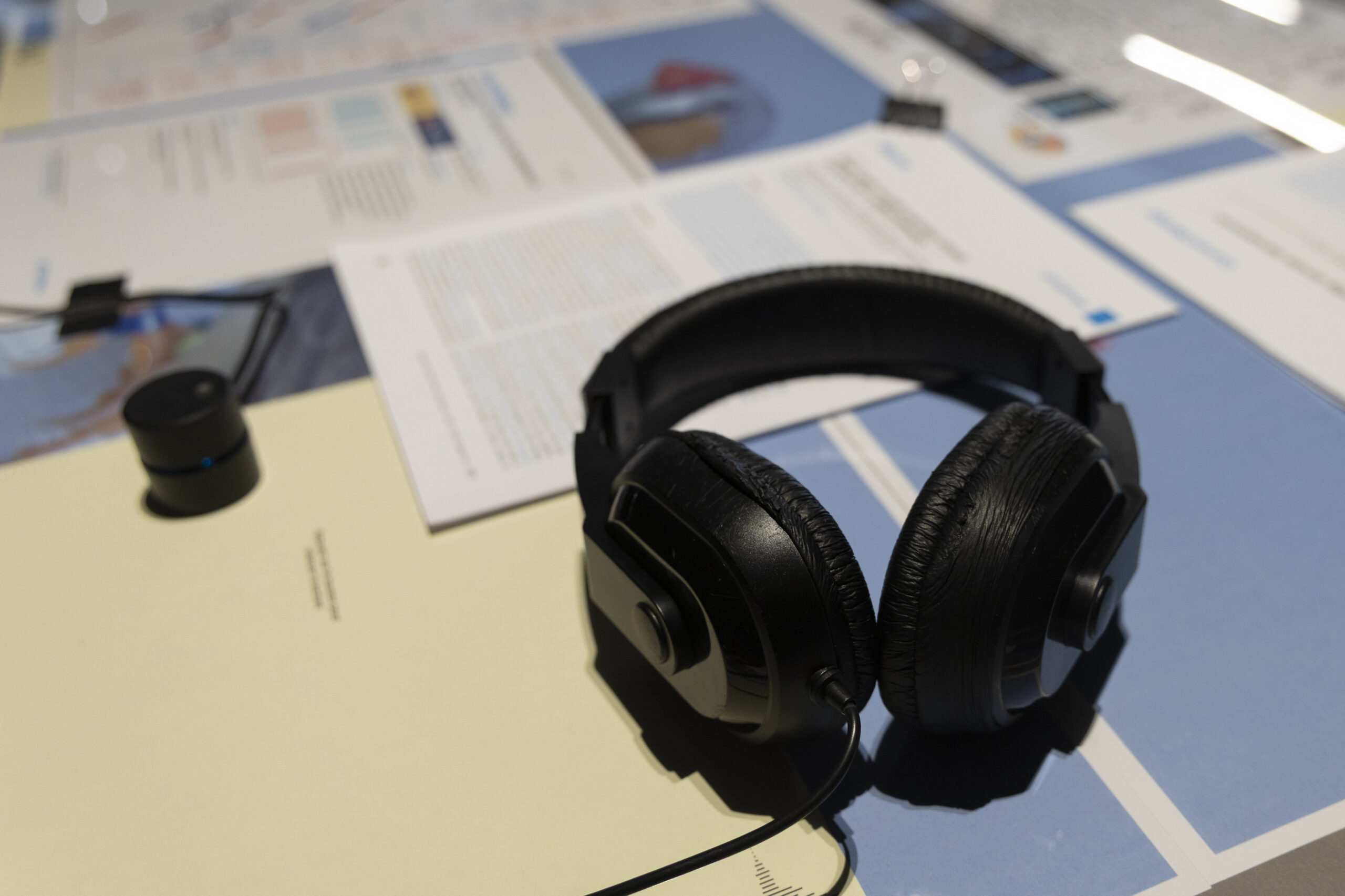
Mixed media installation: Leporello score and directional sound, text collages, 3 channel video with stereo sound
Produced by NCCR Evolving Language, Universität Zurich, Université de Genève and New York University (NYU)
Salle d’Exposition de l’Université de Genève
Scientific Collaborators: Margot Elmaleh, Michael Long (NYU); Anja Zai, Richard Hahnloser (INI UNIZH); Sophie Schwartz (UNIGE), Coralie Debracque (NCCR)
Videography: Mikalai Zhaludovich
Edit: Mariko Montpetit
Graphic Design: Backstore (Lucas Lejeune, Arthur Chaput)
How does thought emerge in humans, insects, and machines? Drawing on tools from sound and science, I design experiments composed of singing mosquitoes, synchronised fireflies, neural networks, and flute-carrying pigeons. In collaboration with specialists and scientific laboratories, I arrange constellation-like scores that function as environments from which musical structures can emerge.
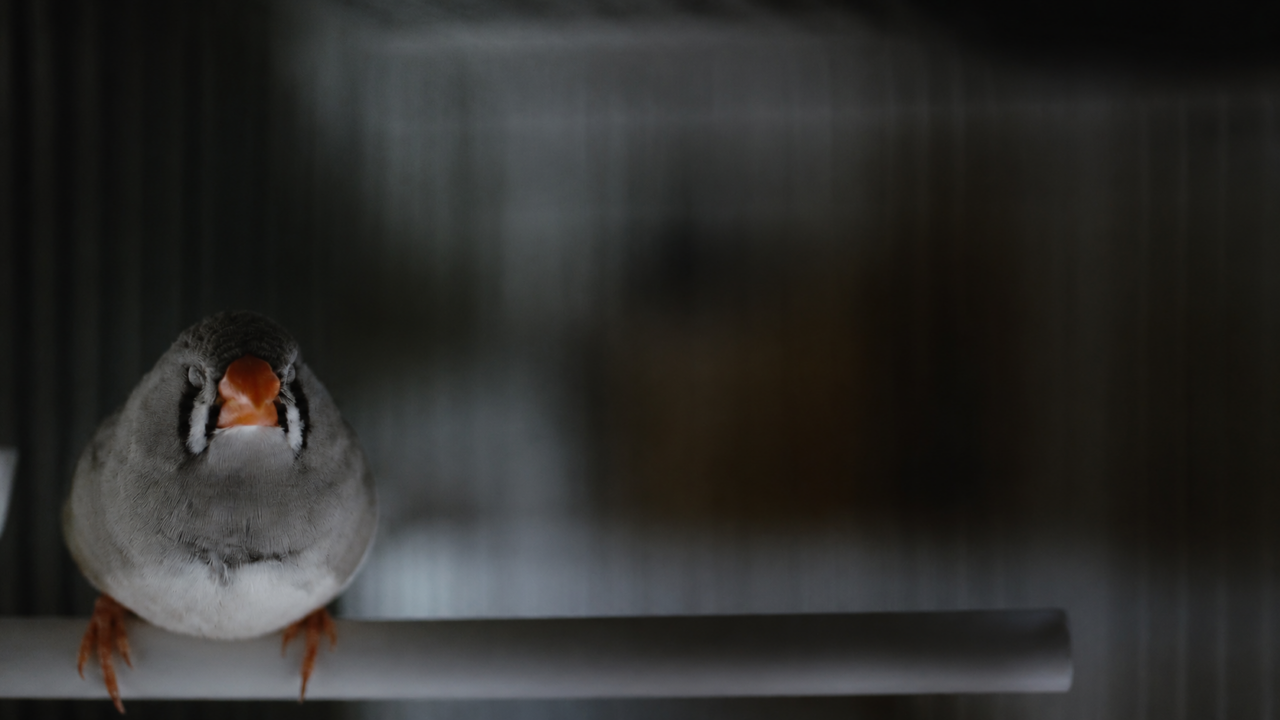
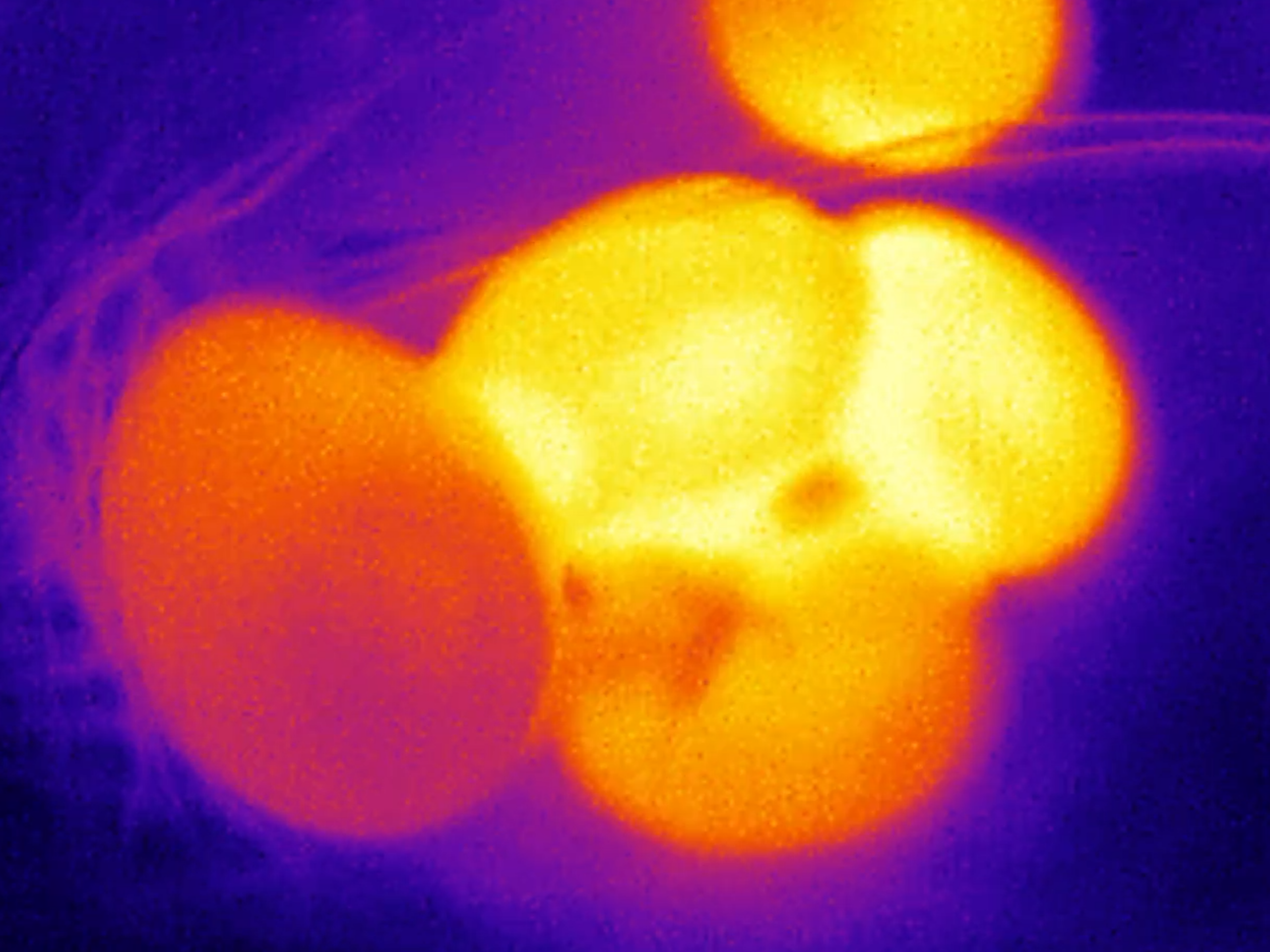
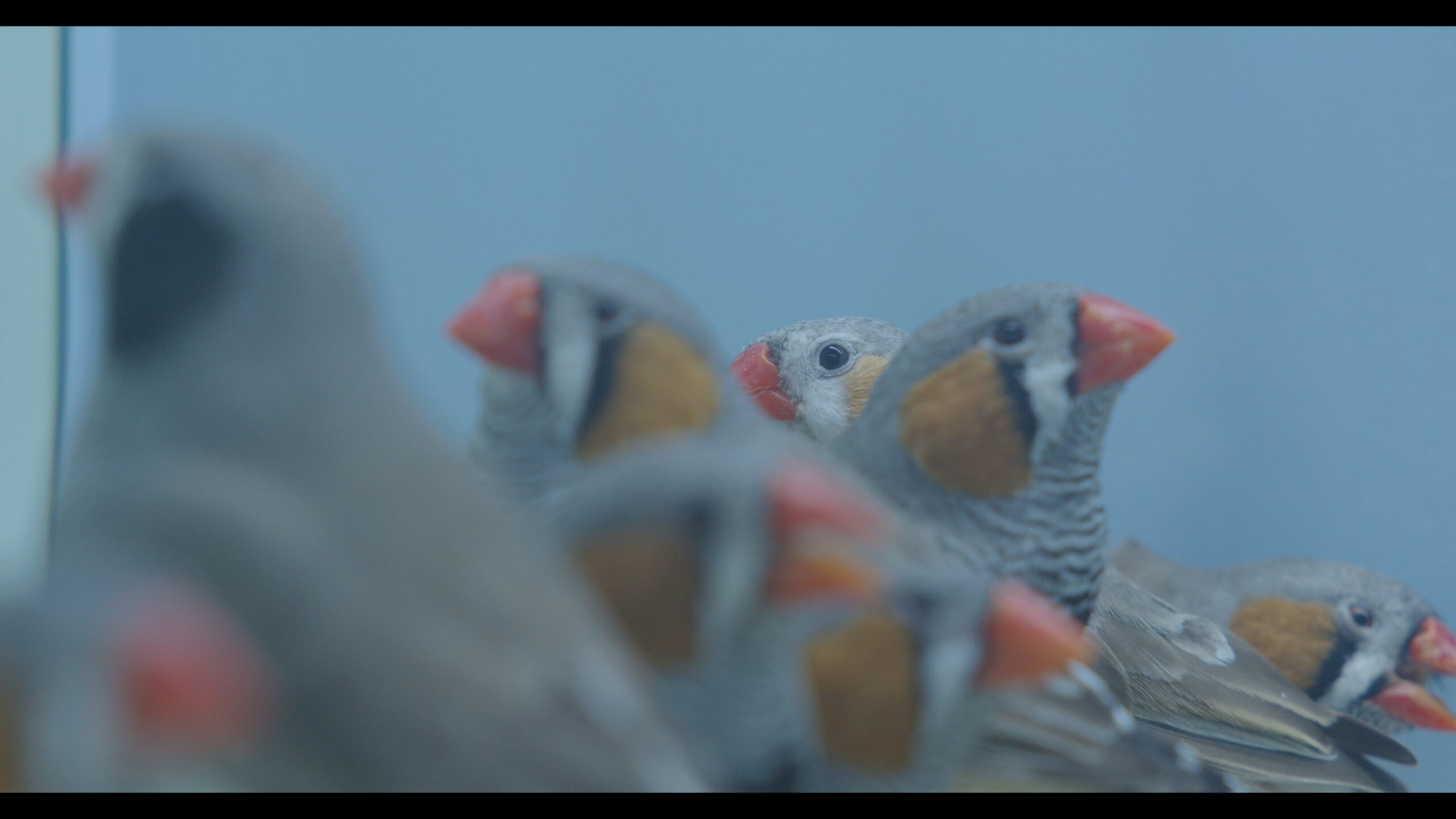
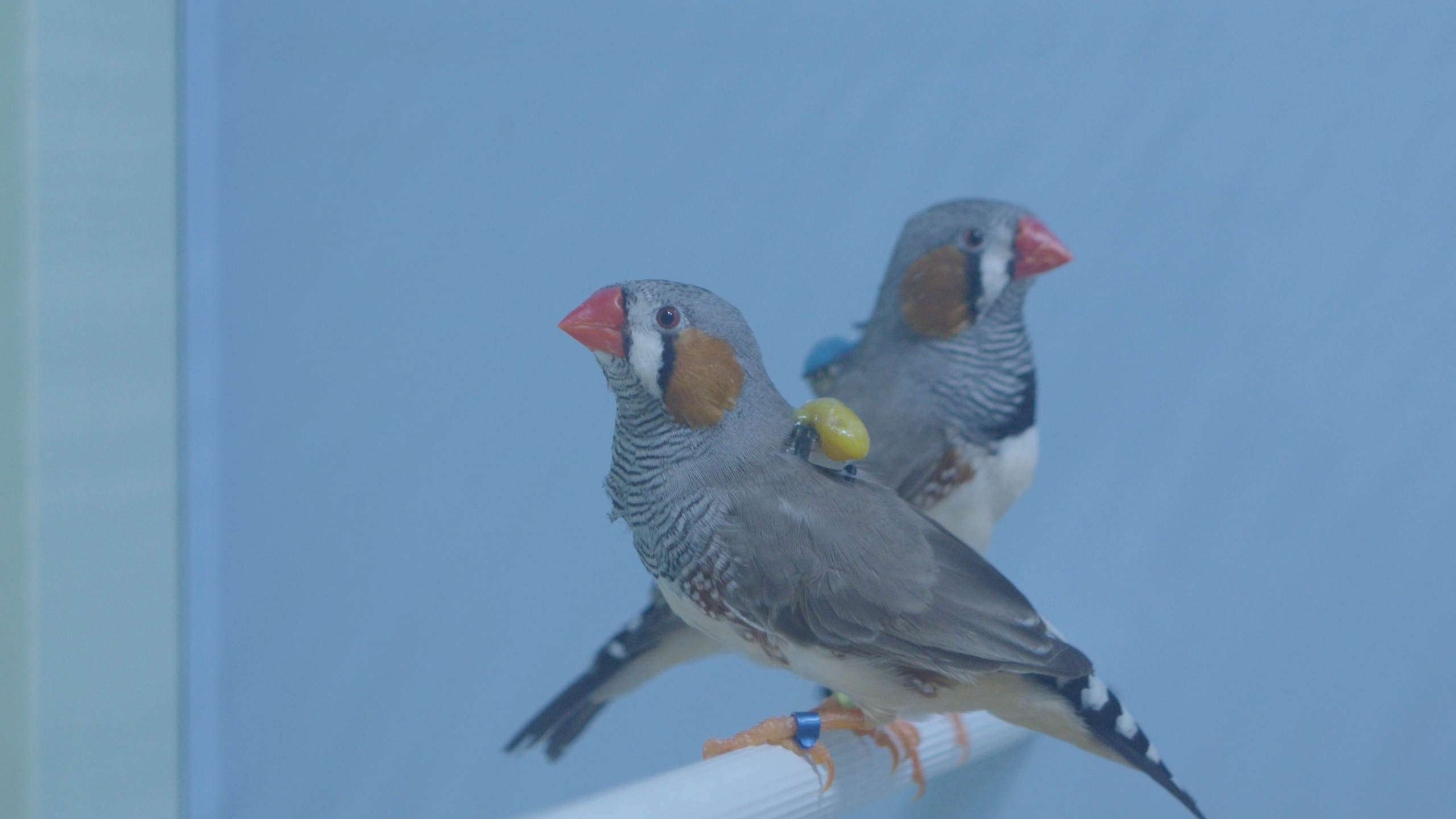
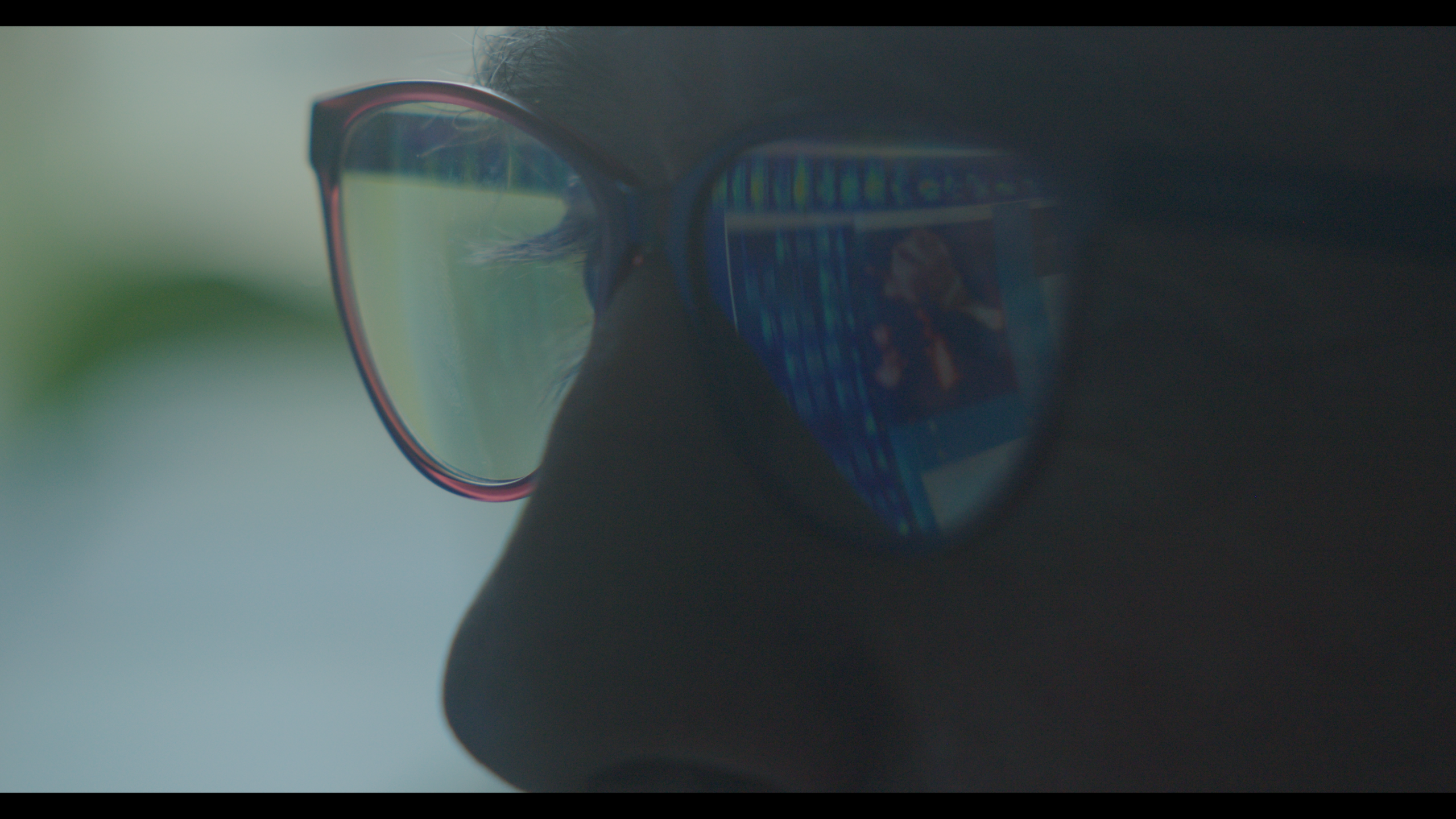
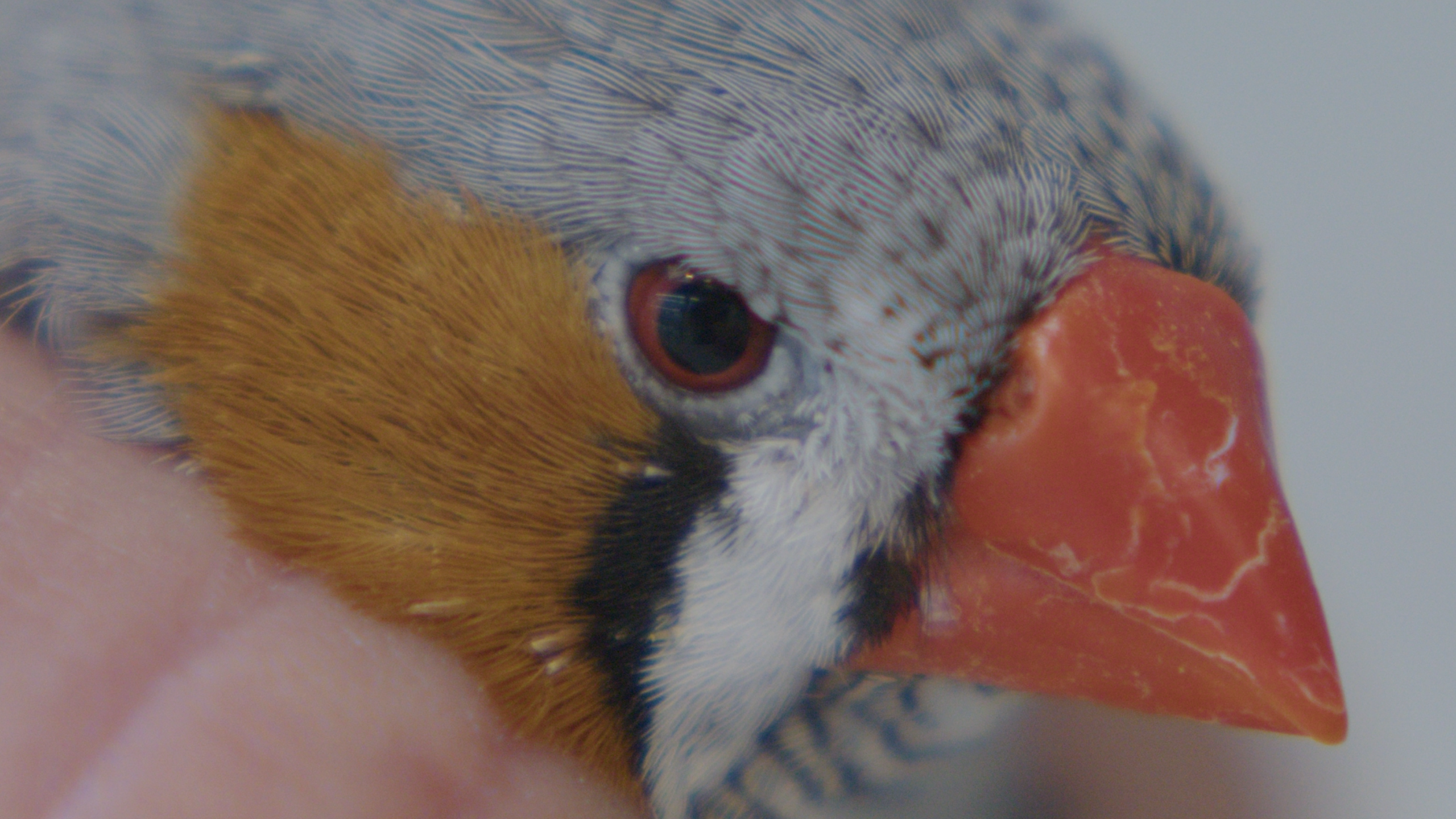
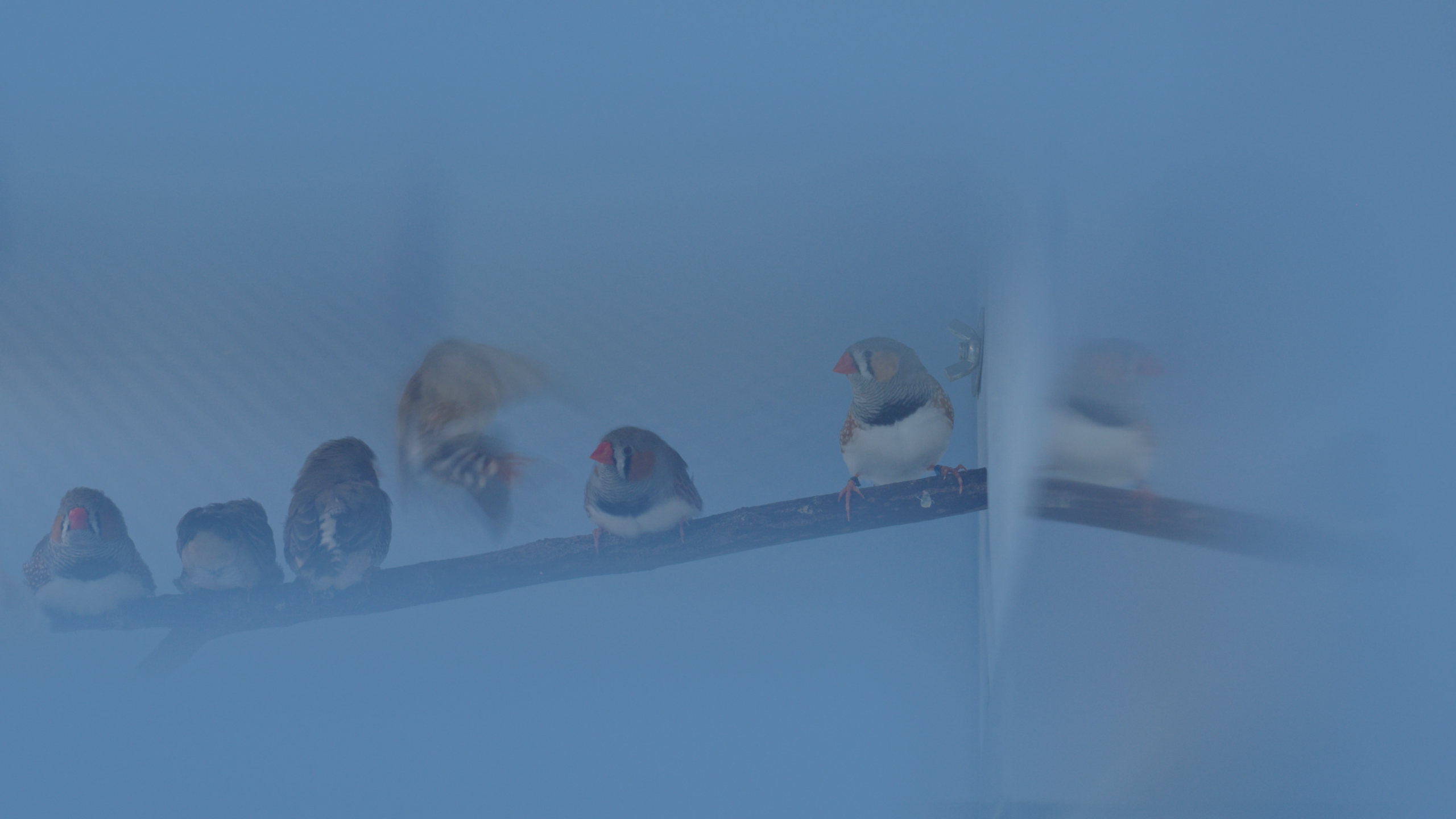
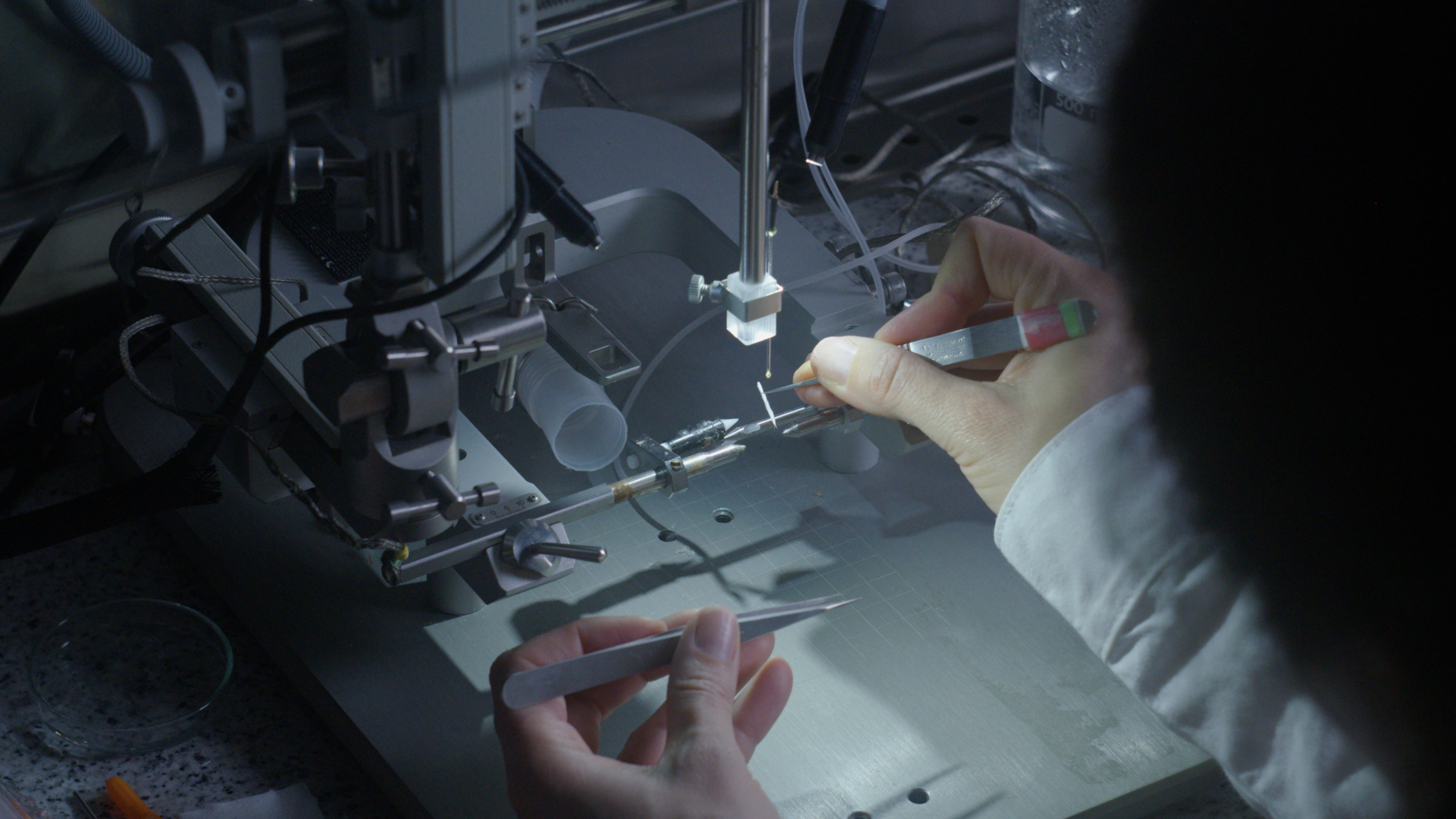
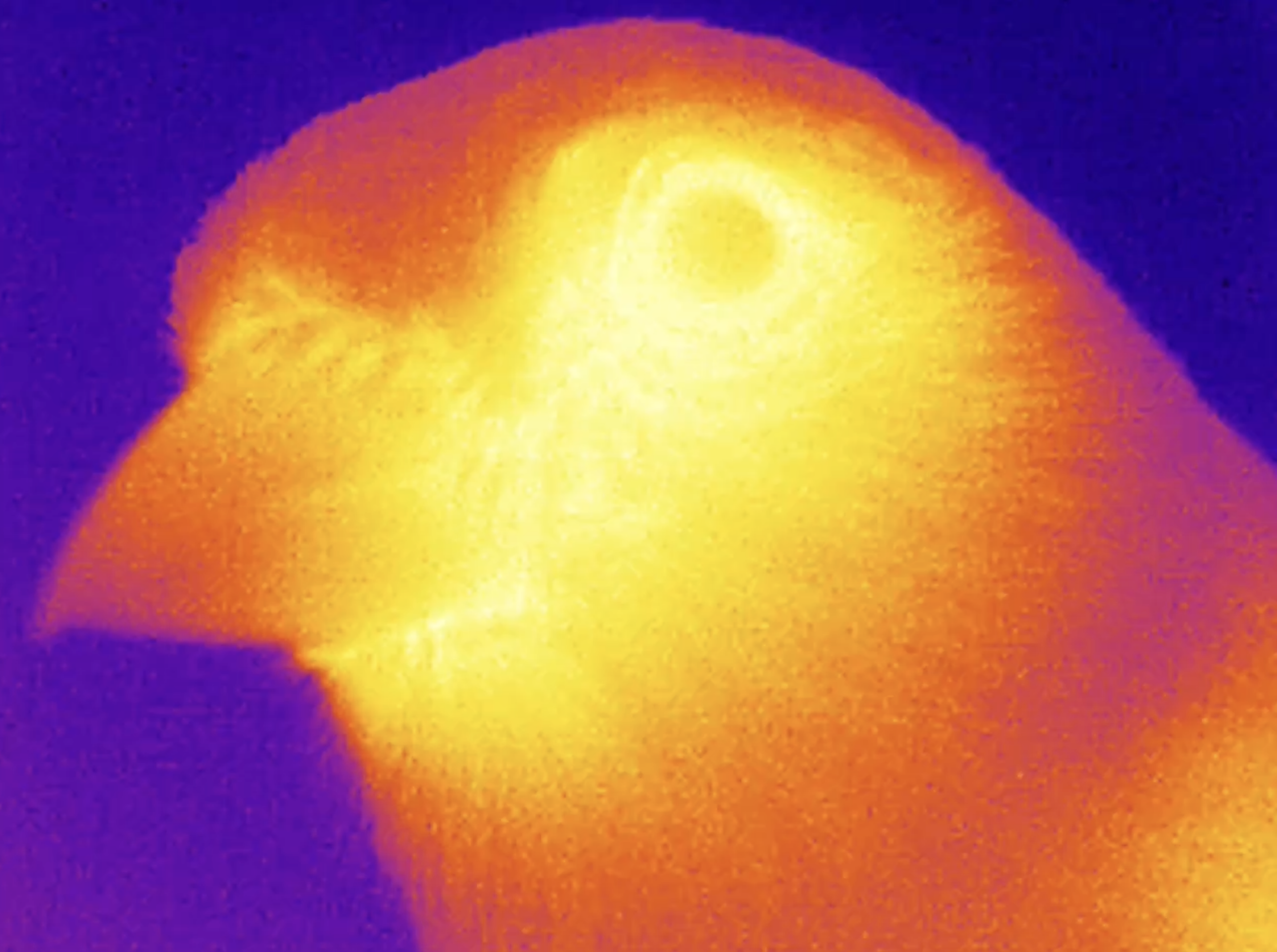
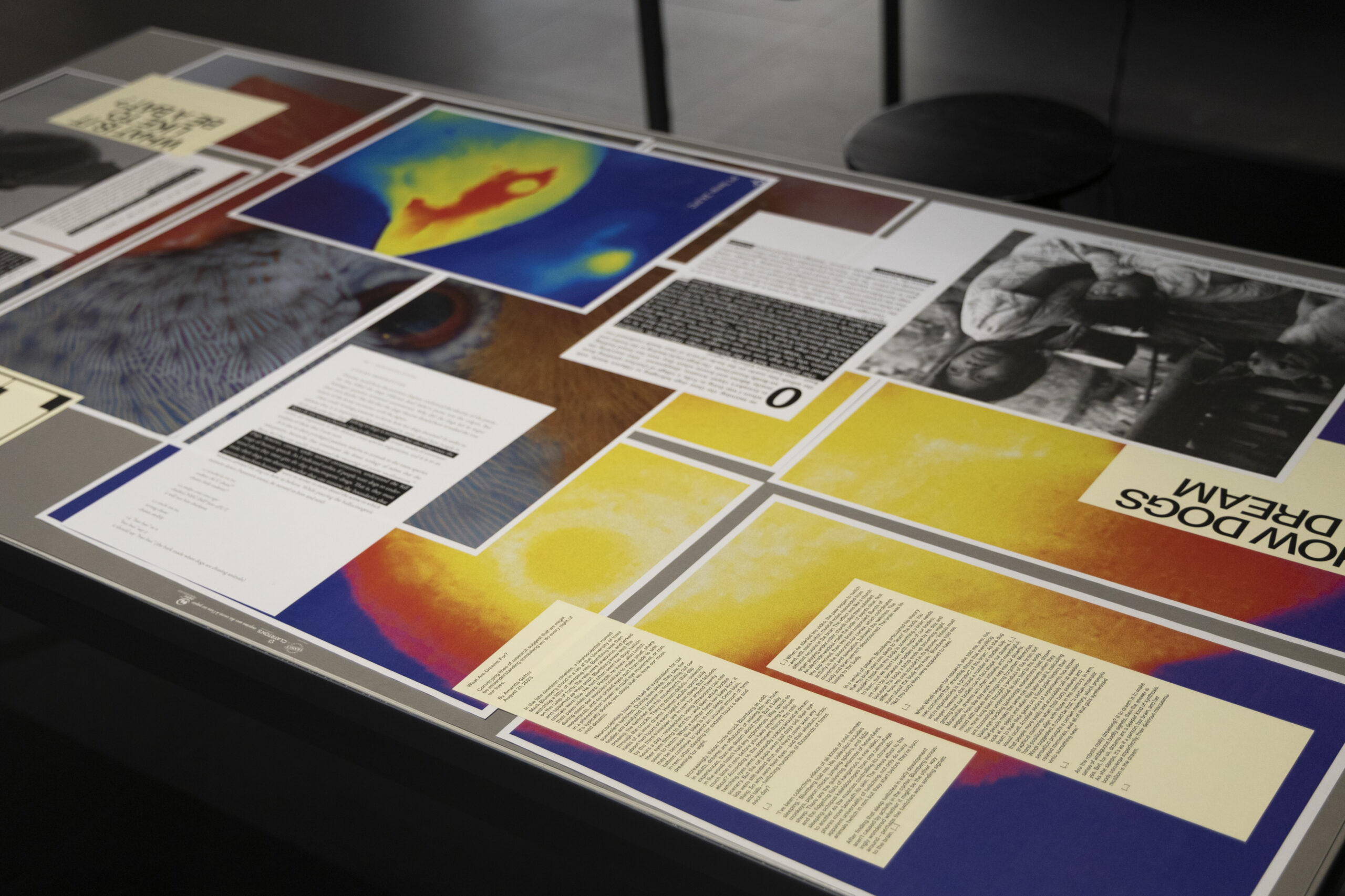
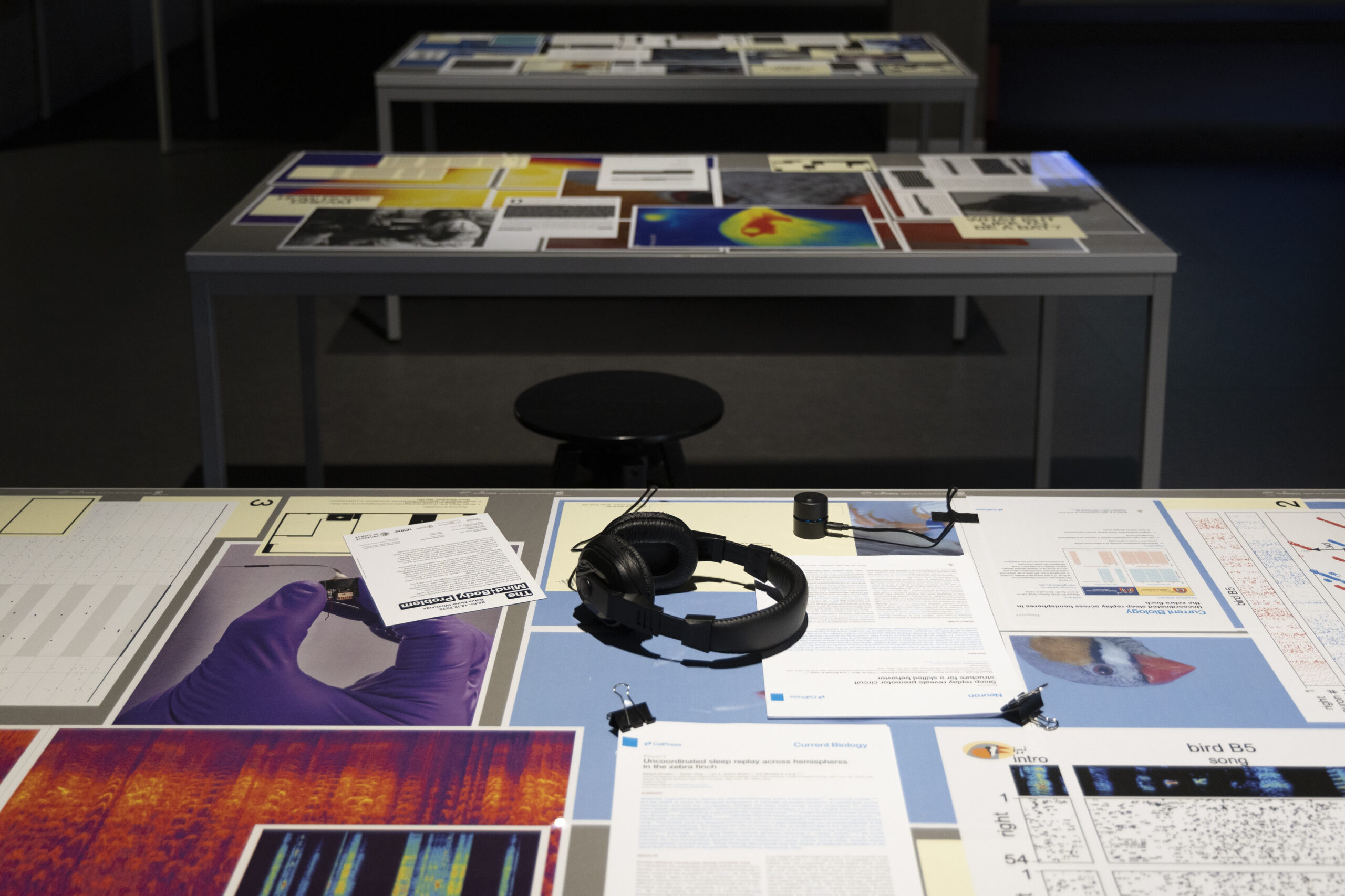
For the exhibition The Mind–Body Problem, one discovery in particular captured my attention: birds dream. They dream the songs and melodies they will sing a few days later. From this scientific observation emerged a long artistic investigation conducted with neuroscientists and a bird named B5. Together, we made these sonic dreams audible. By comparing the bird’s brain activity while awake and asleep, an algorithm decodes and reconstructs fragments of its dreams.
But decoding an experience as intimate as a dream raised new questions: What is the subjective experience of a bird? What are our states of consciousness when we dream? Could these states form a territory shared across species? Perhaps, through dreaming, we can glimpse — or even feel — what it is like to be a bird.
In the laboratory, humans and animals are for one another both subjects and objects, caught in a perpetual interaction. If this exchange collapses, if we no longer attempt to feel what it is like to be another, only objectification and oppression remain. This is precisely where the mind–body problem resides: in the illusion of their separation. To consider bodies as mere objects is one of the pillars of the ecocide that defines our era.
Today, as our words and dreams materialise through neuroscientific electrodes and come to life in artificial neural networks, the separation of body and mind continues to act as a vector of exploitation. Whether poems, posts, or dictionaries, every act of language becomes a “data point” intended to feed these new machines. Let us take the time to listen to, to observe each of these data points — each event of neuronal replay — and attempt to feel how the bird B5 dreams.
Comment émerge la pensée chez les humains, les insectes, les machines ? À l’aide d’outils empruntés au son et à la science, je conçois des expériences composées de moustiques chanteurs, lucioles synchronisées, réseaux neuronaux ou pigeons instrumentistes. En collaboration avec des spécialistes et des laboratoires, j’arrange des partitions-constellations, qui opèrent comme des environnements d’où émergent des structures musicales.
Pour l’exposition The Mind-Body Problem, une découverte a particulièrement retenu mon attention : les oiseaux rêvent. Ils rêvent les chants et mélodies qu’ils chanteront quelques jours plus tard. De cette observation scientifique est née une longue enquête artistique menée avec des neuroscientifiques et un oiseau nommé B5. Ensemble, nous avons rendu audible ces rêves sonores. En comparant l'activité cérébrale de l'oiseau éveillé et endormi, un algorithme décode et reconstitue les fragments de ses songes.
Mais le décodage d’une expérience aussi intime qu’un rêve a soulevé de nouvelles questions : Quelle est l’expérience subjective d’un oiseau ? Quels sont nos états de conscience quand nous rêvons ? Pourraient-ils être un territoire partagé entre espèces ? Peut-être, en rêvant, pouvons-nous entrevoir – ou même ressentir – ce que cela fait d’être oiseau ?
Dans un laboratoire, humains et animaux sont les uns pour les autres à la fois sujets et objets, pris dans une interaction perpétuelle. Si cet échange s’effondre, si nous n’essayons plus d’éprouver ce que cela fait d’être autrui, il ne reste que l’objectivation et l’oppression. C’est précisément là que se situe le problème du corps-esprit : dans l’illusion de leur séparation. Considérer les corps comme de simples objets est l’un des piliers de l’ecocide qui marque notre ère.
Aujourd’hui, alors que nos paroles et nos rêves se matérialisent à travers les électrodes de la neuroscience et prennent vie dans des réseaux de neurones artificiels, la separation corps/esprit continue à agir comme un vecteur d’exploitation. Que ce soit nos poèmes, nos posts ou nos dictionnaires, tout acte de langage devient un “data point” destiné à nourrir ces nouvelles machines. Prenons le temps d’écouter, de regarder chacun de ces points de données, chaque événement de replay neuronal, et tentons de ressentir comment rêve l’oiseau B5.