Infos
2026
Part of the "space relations" project at Weltkunstzimmer Düsseldorf initiated by Mischa Kuball and curated by Marguerite Pilven
In September 2025, I spoke several times with Mila Stoytcheva, an artist and pigeon caretaker based in Cologne. A chance encounter with an injured pigeon in her city drew her into a long-term relationship with these birds—first through photography, then by taking more and more of them into her apartment to live with her. These conversations were recorded and later edited into a single monologue giving us a glimpse into Mila’s life and the blurred boundaries between artistic practice, care work, and cohabitation with non-human animals. The following text is a transcription and translation of her monologue.
Managed pigeon lofts are a concept that, frankly, every city should implement. Feral pigeons aren't "wild animals gone rogue"; they are the descendants of domesticated animals that were used by humans for centuries and have now been left to fend for themselves. This problem won't solve itself. That is why many cities and animal welfare advocates are calling for a nationwide network of supervised pigeon lofts. These lofts provide nesting sites, species-appropriate food, and water. They also make it possible to care for and provide medical treatment to sick or weakened birds on-site. A central aspect is humane population control: eggs are replaced with dummies, interrupting the breeding cycle without harming the animals. The pigeons can fly in and out freely. Volunteers usually handle the care, cleaning the lofts, feeding, changing the water, and keeping an eye on the birds.
In contrast, our interaction with dead pigeons in urban spaces is mostly defined by ignorance. A pigeon run over by a car is treated like a crushed milk carton—something perceived as trash, as if it had never been alive. The physical dynamic is similar: a car hits a body, the contents spill out, and what remains is something to be overlooked or pushed aside. When I began photographing dead pigeons, I felt deeply ashamed to be human. In those moments, it becomes clear how much we have pushed responsibility out of our consciousness. The animals are there, but we don't feel responsible. We don't help, and we don't really want to solve the problem; we just want the pigeons to disappear—as if they were an invasive plague that independently decided to harass us.
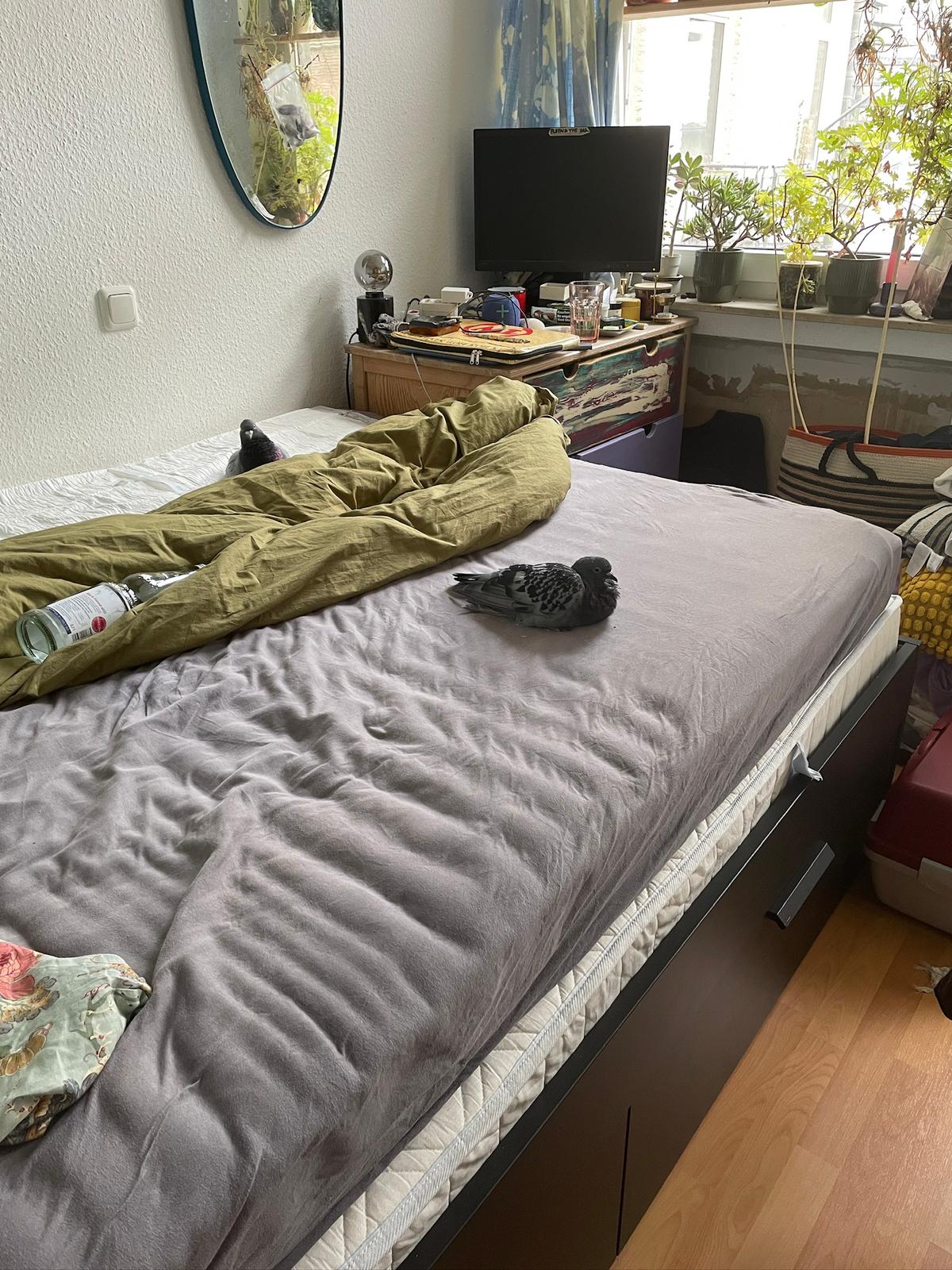
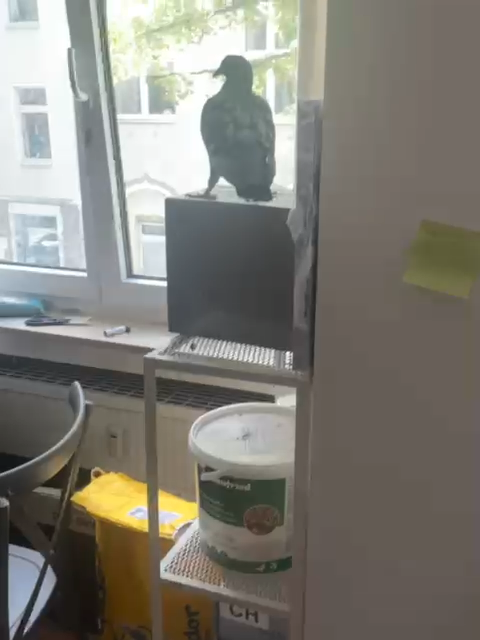
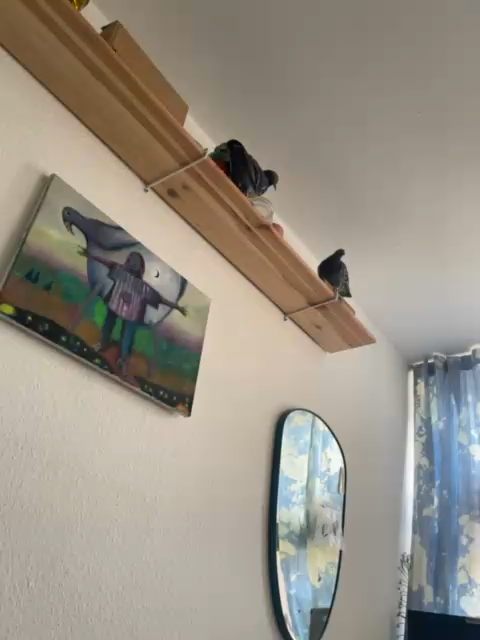
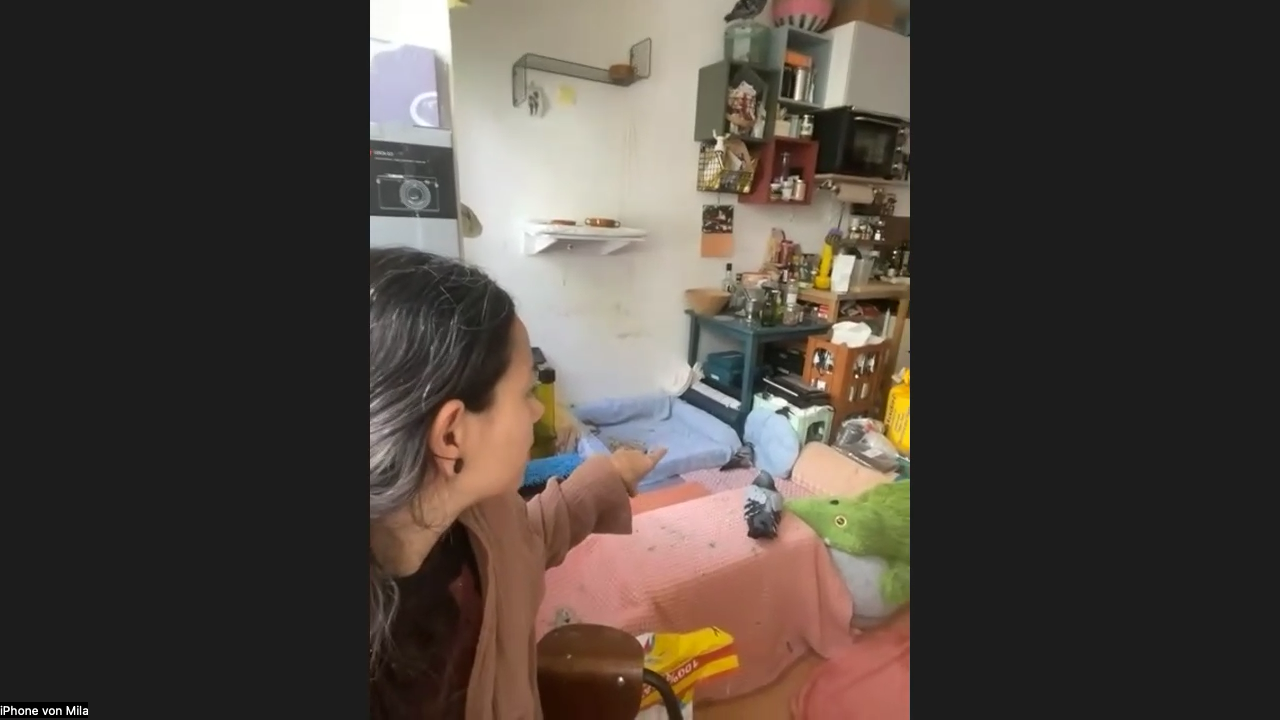
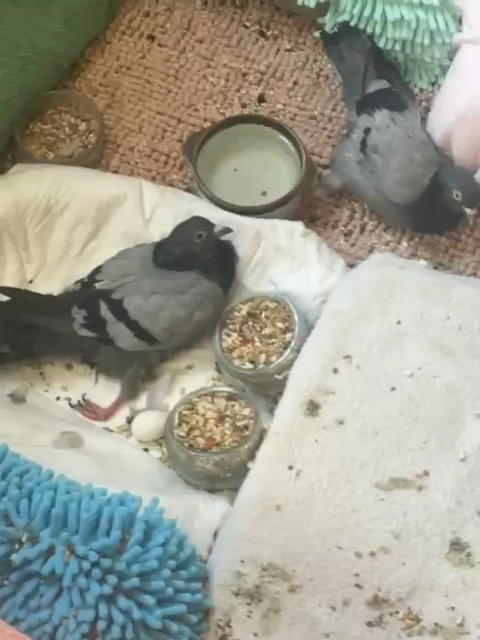
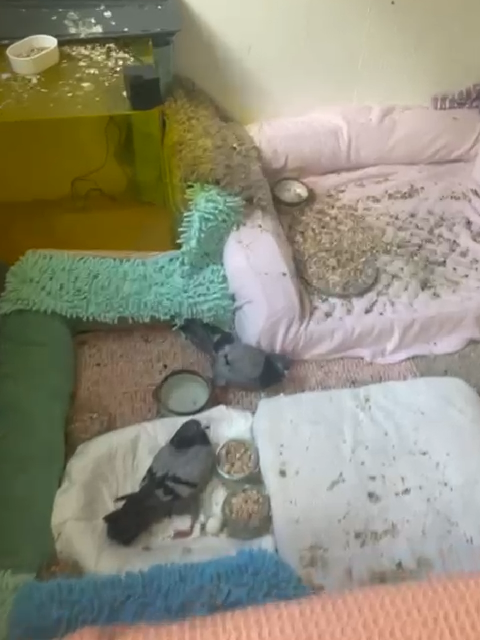
Living in a small space with flight-capable pigeons is a massive adjustment. They fly everywhere—preferring high ground—and leave their marks everywhere. There is no hygienically sealed "safe space," no kitchen that remains untouched. In the beginning, it was a major mental challenge for me to tune out this burden. One’s home is supposed to be a sanctuary, a space where you can let your guard down. Suddenly, everything became extremely condensed: work, daily life, responsibility, and observation—partly out of artistic interest. Our home changed visibly. Anywhere we didn't want the pigeons to go, we laid down changing mats. Simultaneously, these mats marked the spots where they were allowed. Visually, the room took on a completely different feel. Even the rhythm of daily life was dictated by the pigeons.
Mornings often began with cleaning. During the worst phases, I would get up and crawl across the floor with a glass-ceramic scraper—one of those "cleaning boys" from the drugstore—scraping off dried droppings. I’d sweep them up, intentionally waiting until everything was dry because it was easier to remove that way. The first 30 to 45 minutes of the day consisted only of this. Only afterward would I tend to the animals, and eventually, around noon, I’d have my first cup of coffee. I neglected myself completely. That period had a lot to do with self-care—or rather, recognizing my own limits. This phase lasted nearly a year. Then, the first disabled pigeon moved in with us, and something fundamentally changed.
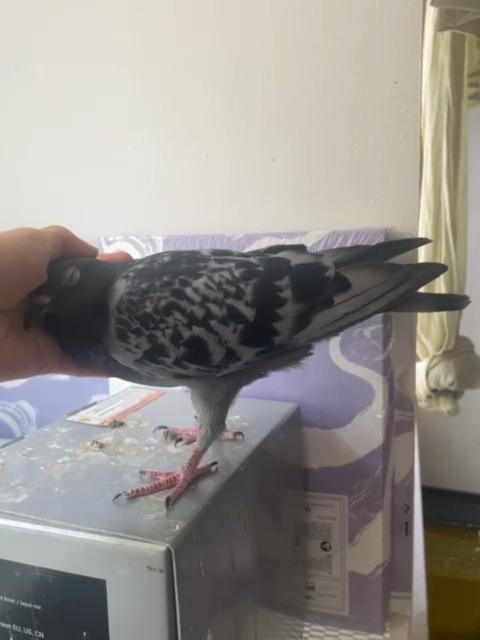
With him, I realized this situation wouldn't stay this way forever. The phase with flight-capable pigeons had an end date. Suddenly, it was less about chaos and more about relationship—about mutual learning and engaging with the essence of this animal. The first disabled pigeon to move in was named Boggy. I had found him on the street myself. He still doesn't like me very much—but I took him in anyway because I realized he wasn't getting the care he needed at the pigeon sanctuary to lead a good, perhaps even luxurious, pigeon life. Because of him, my perception of my own home changed once again.
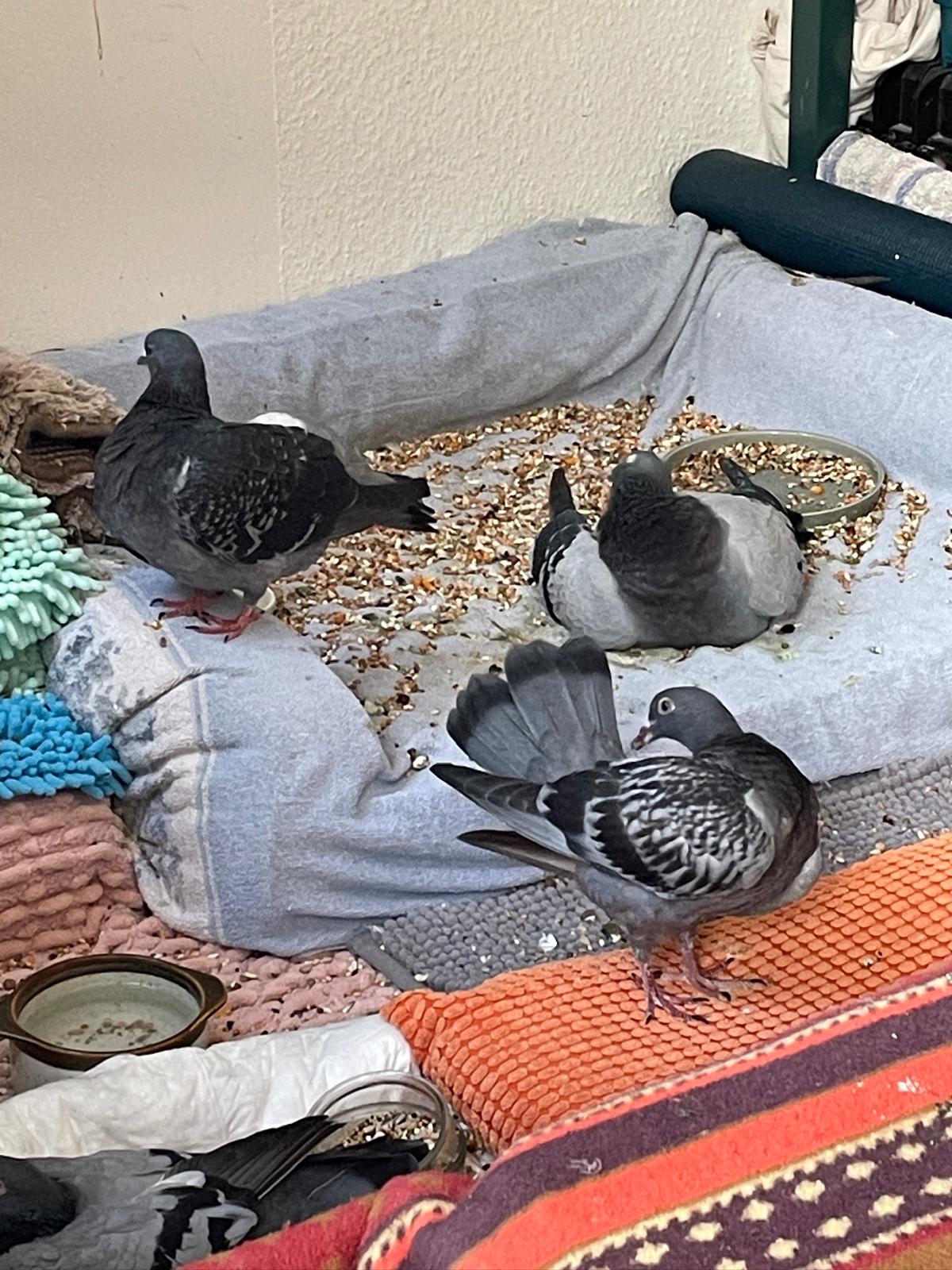
Anyone who lives with pigeons must be clear about their needs. You have to define what you are getting into: What is "normalcy" in your own home, and how does that definition shift in hindsight? Since the animals have lived here, my home feels more like home than ever before. The quality of life within these four walls has increased—even if friends see it very differently. From the outside, it looks as though I have almost no social contacts left, neglect friendships, and can no longer travel. In fact, we are tied down by the daily feeding and care of hundreds of pigeons. These animals depend on us. Flying off for a spontaneous vacation is impossible. Emotionally, it’s intense—to me, they have the same status as children.
This responsibility also shows up in everyday situations. Recently, I told friends that we wanted to go hiking soon. At the same time, I explained that two days prior, we had to go to a clinic in Belgium to have our pigeon, Kleini, sterilized or rather, to have a chip implanted. I didn’t know how they would react. There was a good chance that Kleini and Schmutzi would have to come along on the hike—packed in a backpack. Many people react with a lack of understanding. Pigeons aren't seen as typical pets. But it’s not just about having pets; it’s about having pets with special needs.
Those needs demand permanent adaptation. You have to ask yourself what the animals can manage when you are absent and what risks exist. Over the past few years, things have happened—accidents, deaths—that might have been avoided if we had been further along, more forward-thinking. That’s why it’s crucial to always consider: Is the home a safe living space even without my presence?
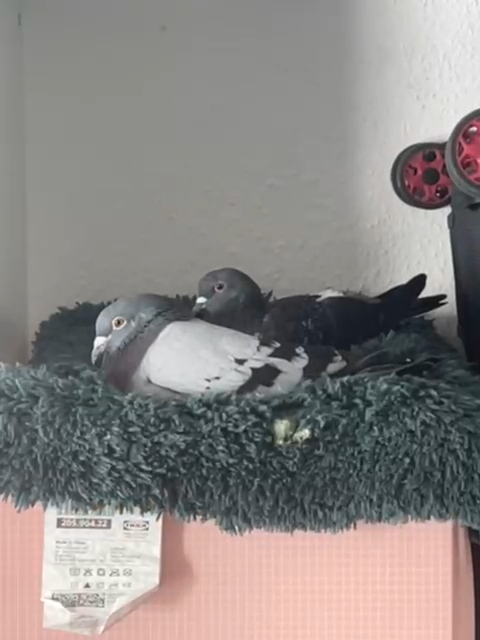
I was aware of this responsibility—and it had a touch of madness to it. You grow into it. In the beginning, you have an idea of what will happen, and then everything seamlessly transitions. For over a year, things couldn't be separated. Life was conceived and born in this home—that too shapes the place and our responsibility. We hadn't swapped out the eggs with dummies and were thus directly responsible for new life.
Initially, I had no reservations about rehoming the young birds later. I knew they would go to the pigeon sanctuary. However, none of it was a clear decision from the start. I first had to learn how it all worked. For example, I wasn't aware that pigeons claim their nesting site for three months. For the parent birds, this spot becomes home. If you remove the male and female, the male might harass the female to death trying to drive her back to the nest.
I learned that there is only a limited window of time. If you miss it, the cycle starts all over again: eggs are laid within two days, they hatch after 18 to 21 days, and the young are cared for for three months—during which the parents already start breeding again. The conditions here were perfect: endless food, high in protein, constantly available. Unknowingly, I had provided all the stimuli that favor breeding. Care turned into over-providing. Peanuts, parsley, lettuce, carrots, fennel—everything. Pure decadence.
This closeness obligated me to think further. What is the best possible next life for these animals? Meanwhile, my own daily life continued—work, obligations—but honestly, all of that was secondary.
Then came a wood pigeon, our only truly wild bird. She was at most a week and a half old when she fell out of the nest. I hand-reared her, feeding her grains directly into her beak. The younger an animal is, the stronger the bond. I replaced her parents and siblings, imitating affection, grooming her head with my fingers. She clearly showed that she enjoyed it. Poopington, that was her name, had no fear of us at all. In this microcosm, it was clear: we carry the responsibility.
This raised the crucial question: What options are there even? You can't simply release an animal into the wild that has been fed species-appropriate food and never had to forage on the street. At the same time, I had to ask myself to what extent my own fear was limiting its destiny. Is it justified to take away its opportunity to experience, even for a short time, what freedom means? As a human, I cannot know what it feels like to fly. We can empathize—but we can never truly know.
Living with this uncertainty was extremely painful. The decision to rehome Poopington took a heavy toll on my mental health. I suffered immensely. I kept asking myself if I could expect the animals born here to suddenly be exposed to the harsh life on the street—to pay a price for freedom that also resulted from my decisions.
In the end, we made a nuanced decision. After the mother died and it was clear that the father came from outside and knew that life, we took him to a managed pigeon loft. The young birds went to the pigeon sanctuary. I marked them all. For weeks, I went there daily, searching for my five pigeons among 500 to 800 others, recognizing them by the tag around their leg, checking their condition and their position in the flock. I even brought one pigeon back in the winter to nurse it back to health—unwittingly introducing bacteria into my own flock.
In that year, I realized that letting go is part of it. The animals live on; I keep an eye on them, but they have their own social structures, partners, and lives. Even my relationship with pigeon droppings has fundamentally changed. I used to find them disgusting, in line with societal norms. Today, it’s an almost affectionate attitude—similar to changing a child's diaper. It’s smelly, yes, but it doesn't gross me out. Pigeons are seed-eaters; their waste smells different from ours.
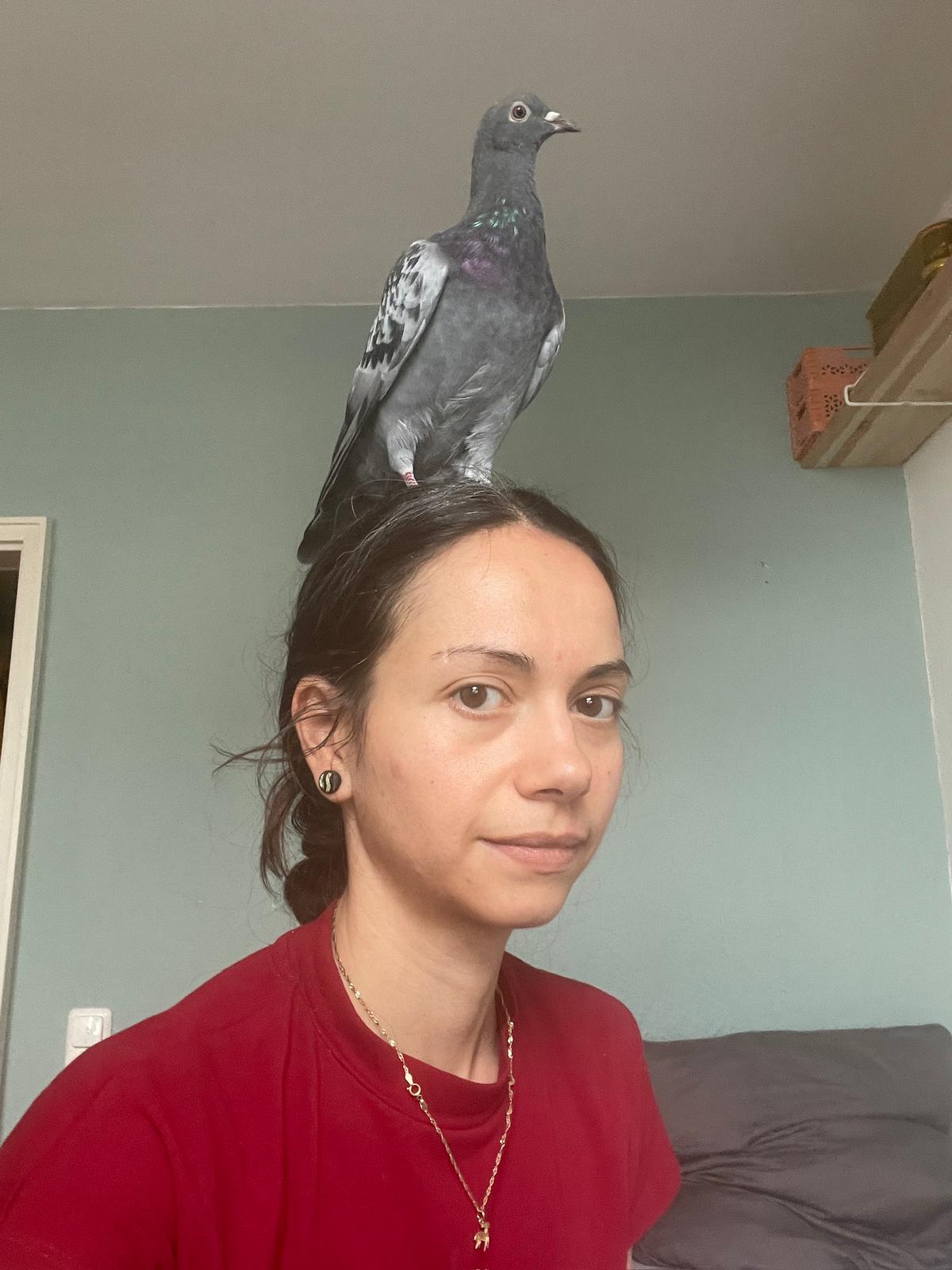
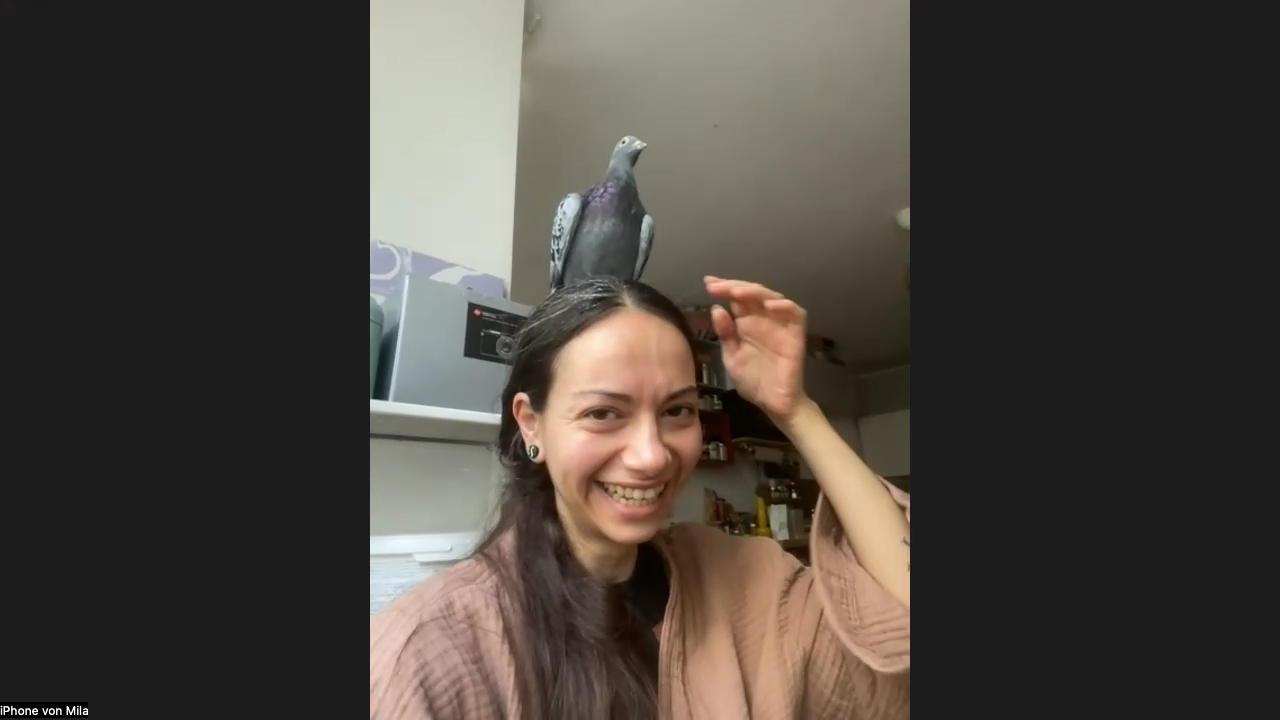
Sometimes, though, you still get a rude awakening in the morning—like when Nini sits on top of the shelf and poops on your head. Shit happens! [laughs]
Im September 2025 führte ich mehrere Gespräche mit Mila Stoytcheva, einer Künstlerin und Taubenpflegerin aus Köln. Eine zufällige Begegnung mit einer verletzten Taube in ihrer Stadt führte zu einer langfristigen Beziehung zu diesen Vögeln – zunächst durch die Fotografie, später, indem sie immer mehr Tauben bei sich in ihrer Wohnung aufnahm und mit ihnen zusammenlebte.
Diese Gespräche wurden aufgezeichnet und anschließend zu einem zusammenhängenden Monolog verdichtet, der einen Einblick in Milas Leben und die verschwimmenden Grenzen zwischen künstlerischer Praxis, Sorgearbeit und dem Zusammenleben mit nichtmenschlichen Tieren gibt. Der folgende Text ist eine Transkription dieses Monologs.
Betreute Taubenhäuser sind ein Konzept, das eigentlich jede Stadt haben sollte.
Denn Stadttauben sind keine „verwilderten Wildtiere“, sondern Nachfahren domestizierter Tiere, die über Jahrhunderte vom Menschen genutzt wurden und heute sich selbst überlassen sind. Dieses Problem löst sich nicht von allein. Deshalb fordern viele Städte und Tierschützer:innen ein flächendeckendes Netz betreuter Taubenschläge. Diese Taubenhäuser bieten Brutplätze, artgerechtes Futter und Wasser. Sie ermöglichen es außerdem, kranke oder geschwächte Tiere direkt vor Ort zu versorgen und medizinisch zu behandeln. Ein zentraler Aspekt ist die humane Populationskontrolle: Die Eier werden durch Attrappen ersetzt, sodass die Brut unterbrochen wird, ohne den Tieren zu schaden. Die Tauben können frei ein- und ausfliegen. Ehrenamtliche kümmern sich meist um die Betreuung: Sie reinigen die Schläge, füttern, wechseln die Tränken und behalten die Tiere im Blick.Der Umgang mit toten Tauben im Stadtraum ist dagegen meist von Ignoranz geprägt.
Ein überfahrener Taubenkörper wird behandelt wie ein zerdrückter Tetrapak – etwas, das als Müll wahrgenommen wird, als wäre es nie lebendig gewesen. Die physische Dynamik ist ähnlich: Ein Auto trifft auf einen Körper, der Inhalt verteilt sich, und zurück bleibt etwas, das man übersieht oder wegschiebt. Als ich begann, tote Tauben zu fotografieren, schämte ich mich zutiefst, Mensch zu sein. Denn in diesem Moment wird klar, wie sehr wir Verantwortung aus unserem Bewusstsein verdrängt haben. Die Tiere sind da, aber wir fühlen uns nicht zuständig. Wir helfen nicht, wir wollen das Problem nicht wirklich lösen, sondern nur, dass die Tauben verschwinden – als wären sie eine invasive Plage, die sich eigenständig dazu entschlossen hat, uns zu belästigen.Mit flugfähigen Tauben an einem kleinen Ort zu leben, ist eine massive Umstellung.
Sie fliegen überall hin, bevorzugt nach oben, und hinterlassen überall ihre Spuren. Es gibt keinen hygienisch abgeschotteten Safe Space, keine Küche, die verschont bleibt. Am Anfang war es für mich eine große mentale Herausforderung, diese Belastung auszublenden. Das eigene Zuhause ist eigentlich ein Rückzugsort, ein Raum, in dem man die Hüllen fallen lässt. Plötzlich wurde alles extrem verdichtet: Arbeit, Alltag, Verantwortung, Beobachtung – auch aus künstlerischem Interesse. Unser Zuhause hat sich sichtbar verändert. Überall dort, wo die Tauben nicht hinmachen sollten, lagen Wickelunterlagen. Gleichzeitig markierten sie die Orte, an denen es erlaubt war. Visuell bekam der Raum ein völlig anderes Gefühl. Und auch der Rhythmus des Alltags wurde von den Tauben bestimmt.Morgens begann der Tag oft mit Putzen.
In den schlimmsten Phasen stand ich auf und kroch mit einem Ceranfeld-Schaber über den Boden – einem dieser „Putzboys“ aus der Drogerie – und schabte die getrockneten Hinterlassenschaften ab, kehrte sie zusammen und wartete bewusst, bis alles trocken war, weil es sich dann leichter entfernen ließ. Die ersten 30 bis 45 Minuten des Tages bestanden nur daraus. Erst danach versorgte ich die Tiere, und irgendwann mittags trank ich meinen ersten Kaffee. Ich stellte mich selbst komplett hinten an. Diese Zeit hatte viel mit Selbstfürsorge zu tun – oder besser: mit dem Erkennen der eigenen Grenzen. Diese Phase dauerte knapp ein Jahr. Dann zog die erste behinderte Taube bei uns ein, und etwas veränderte sich grundlegend.Mit ihr wurde mir klar, dass diese Situation nicht ewig so bleiben würde.
Die Phase mit flugfähigen Tauben hatte ein Ende. Es ging plötzlich weniger um Chaos und mehr um Beziehung. Um gegenseitiges Lernen, um das Sich-Einlassen auf das Wesen dieses Tieres. Die erste behinderte Taube, die bei uns einzog, hieß Boggy. Ich hatte ihn selbst auf der Straße gefunden. Er mag mich bis heute nicht besonders – aber ich habe ihn trotzdem mitgenommen, weil ich gemerkt habe, dass er auf dem Taubenhof nicht die Fürsorge bekam, die er gebraucht hätte, um wirklich ein gutes, vielleicht sogar luxuriöses Taubenleben führen zu können. Auch meine Wahrnehmung des eigenen Zuhauses veränderte sich dadurch erneut.Wer mit Tauben lebt, muss sich klar über ihre Bedürfnisse sein.
Man muss definieren, worauf man sich einlässt: Was ist Normalität im eigenen Zuhause, und wie verschiebt sich diese Definition im Rückblick? Seit die Tiere hier leben, fühlt sich mein Zuhause mehr nach Zuhause an als je zuvor. Die Qualität des Lebens in diesen vier Wänden ist gestiegen – auch wenn Freunde das ganz anders sehen. Von außen wirkt es so, als hätte ich kaum noch soziale Kontakte, würde Freundschaften vernachlässigen und könnte nicht mehr verreisen. Tatsächlich sind wir durch das tägliche Füttern und Versorgen von Hunderten Tauben gebunden. Diese Tiere sind abhängig von uns. Spontan in den Urlaub fliegen ist unmöglich. Emotional ist das extrem – sie haben für mich einen Stellenwert wie Kinder.Diese Verantwortung zeigt sich auch in alltäglichen Situationen.
Neulich erzählte ich Freunden, dass wir bald wandern gehen wollen. Gleichzeitig erklärte ich, dass wir zwei Tage vorher nach Belgien in eine Klinik müssen, um unsere Taube Kleini sterilisieren zu lassen beziehungsweise einen Chip implantieren zu lassen. Ich wusste nicht, wie sie darauf reagieren würde. Es konnte gut sein, dass Kleini und Schmutzi beim Wandern mitkommen müssten – eingepackt im Rucksack. Viele reagieren darauf verständnislos. Tauben gelten nicht als typische Haustiere. Aber es geht nicht nur darum, Haustiere zu haben, sondern Haustiere mit besonderen Bedürfnissen.Diese Bedürfnisse verlangen permanente Anpassung.
Man muss sich fragen, was die Tiere leisten können, wenn man abwesend ist, und welche Risiken bestehen. In den vergangenen Jahren sind Dinge passiert – Unfälle, Todesfälle –, die man vielleicht hätte vermeiden können, wenn man weiter gewesen wäre, vorausschauender. Deshalb ist es entscheidend, immer mitzudenken: Ist das Zuhause auch ohne meine Anwesenheit ein sicherer Lebensraum?Diese Verantwortung war mir bewusst – und sie hatte etwas Wahnsinniges.
Man wächst hinein. Am Anfang hat man eine Vorstellung davon, was passieren wird, und dann geht alles nahtlos ineinander über. Über ein Jahr lang ließ sich das nicht trennen. In diesem Zuhause wurde Leben gezeugt und geboren – auch das prägt den Ort und unsere Verantwortung. Wir hatten Eier nicht ausgetauscht und waren damit direkt mitverantwortlich für neues Leben.Zunächst hatte ich keine Bedenken, die Jungtiere später abzugeben.
Ich wusste, sie würden auf den Taubenhof kommen. Doch nichts davon war von Anfang an endgültig entschieden. Ich musste erst lernen, wie das alles funktioniert. Zum Beispiel war mir nicht bewusst, dass Tauben drei Monate lang Anspruch auf ihren Nestort haben. Für die Elterntiere wird dieser Ort zum Zuhause. Nimmt man Männchen und Weibchen heraus, kann das Männchen das Weibchen zu Tode hetzen, um sie zurück zum Nest zu treiben.Ich lernte, dass es nur ein begrenztes Zeitfenster gibt.
Verpasst man es, beginnt der Kreislauf von vorn: Innerhalb von zwei Tagen werden Eier gelegt, nach 18 bis 21 Tagen schlüpfen sie, drei Monate lang werden die Jungen versorgt – währenddessen beginnen die Eltern bereits wieder zu brüten. Die Bedingungen waren hier perfekt: Futter ohne Ende, proteinreich, konstant verfügbar. Unbewusst hatte ich alle Stimuli geliefert, die Brut begünstigen. Aus Fürsorge wurde Überversorgung. Erdnüsse, Petersilie, Salat, Möhren, Fenchel – alles. Dekadenz pur.Diese Nähe verpflichtete mich, weiterzudenken.
Was ist das bestmögliche nächste Leben für diese Tiere? Gleichzeitig lief mein eigener Alltag weiter – Arbeit, Verpflichtungen –, aber ehrlich gesagt war das alles zweitrangig.Hinzu kam eine Ringeltaube, unsere einzige wirklich wilde Taube.
Sie war höchstens anderthalb Wochen alt, als sie aus dem Nest gefallen war. Ich zog sie von Hand auf, fütterte sie mit Körnern, direkt in den Schnabel. Je jünger ein Tier ist, desto stärker bindet es sich. Ich ersetzte Eltern und Geschwister, imitierte Zuwendung, putzte ihren Kopf mit den Fingern. Sie zeigte deutlich, dass ihr das gefiel. Poopington, so hieß sie, hatte keinerlei Angst vor uns. In diesem Mikrokosmos war klar: Wir tragen die Verantwortung.Damit stellte sich die entscheidende Frage: Welche Optionen gibt es überhaupt?
Ein Tier, das artgerecht gefüttert wurde und nie auf der Straße Nahrung suchen musste, kann man nicht einfach auswildern. Gleichzeitig musste ich mich fragen, inwiefern meine eigene Angst seine Lebensbestimmung einschränkt. Ist es gerechtfertigt, ihm die Möglichkeit zu nehmen, auch nur für kurze Zeit, zu erfahren, was Freiheit bedeutet? Als Mensch kann ich nicht wissen, wie es sich anfühlt, zu fliegen. Wir können uns hineinversetzen – aber nie wirklich wissen.Mit dieser Unsicherheit zu leben, war extrem schmerzhaft.
Die Entscheidung, Poopington abzugeben, hat mich psychisch sehr belastet. Ich litt enorm. Immer wieder fragte ich mich, ob ich den hier geborenen Tieren zumuten kann, plötzlich dem harten Straßenleben ausgesetzt zu werden – einen Preis für Freiheit zu zahlen, der auch aus meinen Entscheidungen resultierte.Am Ende trafen wir eine differenzierte Entscheidung.
Nachdem die Mutter verstorben war und klar war, dass der Vater von draußen kam und das Leben dort kannte, brachten wir ihn in einen betreuten Taubenschlag. Die Jungtiere kamen auf den Taubenhof. Ich markierte sie alle. Wochenlang war ich täglich dort, suchte meine fünf Tauben zwischen 500 bis 800 anderen, erkannte sie an ihren Fußringen, überprüfte ihren Zustand, ihre Stellung in der Gruppe. Eine Taube holte ich im Winter sogar zurück, pflegte sie gesund – und schleppte dabei ungewollt Bakterien in meinen eigenen Bestand ein.In diesem Jahr wurde mir klar, dass Loslassen dazugehört.
Die Tiere leben weiter, ich habe ein Auge auf sie, aber sie haben ihre eigenen sozialen Strukturen, Partner, Leben. Und auch mein Verhältnis zu Taubenkot hat sich grundlegend verändert. Früher empfand ich ihn als etwas Ekliges, ganz im Sinne gesellschaftlicher Normen. Heute ist es eine fast liebevolle Haltung – ähnlich wie beim Windelwechseln bei Kindern. Es riecht, ja, aber es ekelt nicht. Tauben sind Körnerfresser, ihre Hinterlassenschaften riechen anders als unsere.Manchmal wird man morgens trotzdem unsanft geweckt.
Wenn Nini oben auf dem Regal sitzt und einem auf den Kopf kackt. Das haben wir uns nicht ausgesucht – aber es passiert. Leider täglich. (lacht)